Be yourself; Everyone else is already taken.
— Oscar Wilde.
This is the first post on my new blog. I’m just getting this new blog going, so stay tuned for more. Subscribe below to get notified when I post new updates.
A space to share thoughts on watches
Be yourself; Everyone else is already taken.
— Oscar Wilde.
This is the first post on my new blog. I’m just getting this new blog going, so stay tuned for more. Subscribe below to get notified when I post new updates.
I came across an Hong Kong watch advertisement on YouTube (https://www.youtube.com/watch?v=7DbsjRuFbv8) and I was drawn to it instantly. One of the reasons of me being attracted to the advert is that it featured two famous Chinese artists, Chow Yun Fat and Jacklyn Wu Chien Lien, who I grew up watching their movies. Another reason is that the advert is classic with the story line perfectly depicts the feeling and meaning of love. It is notable that the catch line ‘不在乎天长地久,只在乎曾经拥有’, which basically means ‘don’t care how long is it, only care the moments had before’, perfectly summed up the advert and subsequently established Solvil et Titus watch brand as the symbol of romance.
Solvil et Titus was dated back to its foundation in 1887 by Paul Bernard Ditisheim (1868-1945), a well respected originator of modern chronometry. The brand was established in La Chaux-de-Fonds, Neuchâtel, Switzerland. “Solvil” refers to the village of Sonvilier on the Swiss side of the Jura Mountains, where a factory produced meticulously crafted watch components; while “Titus” pays tribute to the Roman emperor in the first century AD.
He studied at the Horological School of in La Chaux-de-Fonds, the historic birthplace of watch-making industry, and received his diploma at the age of 13. He was then trained under major watch makers and worked at his family’s Vulcain manufacture until 1892 when he founded his own brands: Solvil (whose items were often signed Paul Ditisheim) and Titus (whose items were generally marked separately).
Ditisheim shot to fame by winning precision trials against other watchmakers, culminating in his crowning achievement of winning the world’s chronometric record at the Royal Kew Observatory in 1912. Ever since, Solvil et Titus has become synonymous with the highest standards in timekeeping precision – from navigational-purposed watches to chronometers with automatic display of sunrise and sunset time to the minute each day; from watches with perpetual calendars to ones that could strike and incorporated chimes, from chronometers with equations of time to timepieces with numerous complications.
In 1930, Ditisheim handed over the Solvil et Titus and Paul Ditisheim brands to a wealthy Swiss entrepreneur and captain of industry Paul Bernard Vogel. Vogel, heir to a prestigious family of industrialist and married to the heiress of the prominent Eberhard family, was also a member of the Swiss watch industry’s elite. Vogel moved the company’s headquarters to Geneva where he started to expand it.
By the 1950s, Vogel, feeling the shift in consumer’s habits, decided to divide its brands into two. On one hand, the company kept producing the luxury watches it was famous for. On the other hand, it started producing lower-cost watches that fitted properly the emerging mass consumption markets.
In the late 1970s, Paul Vogel who inherited the company from his father came back to Europe and decided to sell the Solvil et Titus brand. The European activities became part of Ebel while the Asian activities were sold to Hong Kong entrepreneur Joseph Wong and are now part of Stelux Holdings. The company, now headquartered in Hong Kong, has kept its name and continues its growth as one of Asia’s favourite brands, notably thanks to its famous Time is Love advertising campaigns starring superstars Dave Wang Chieh, Chow Yun Fat and Andy Lau as well as world-renowned footballer Ryan Giggs, [and] that have become classics of Hong Kong’s advertising industry.
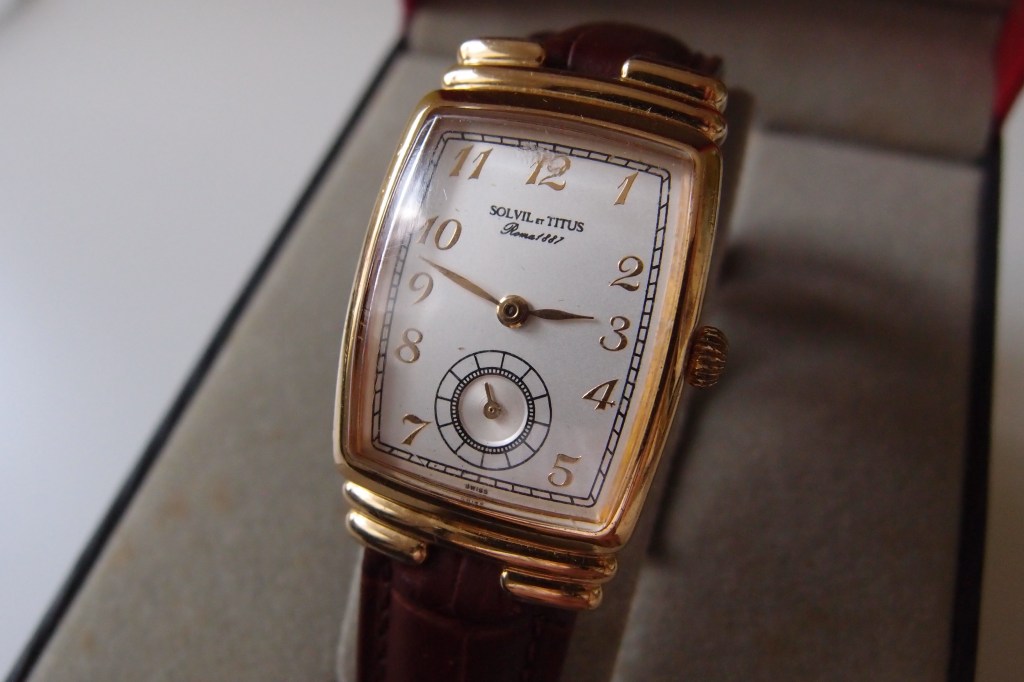
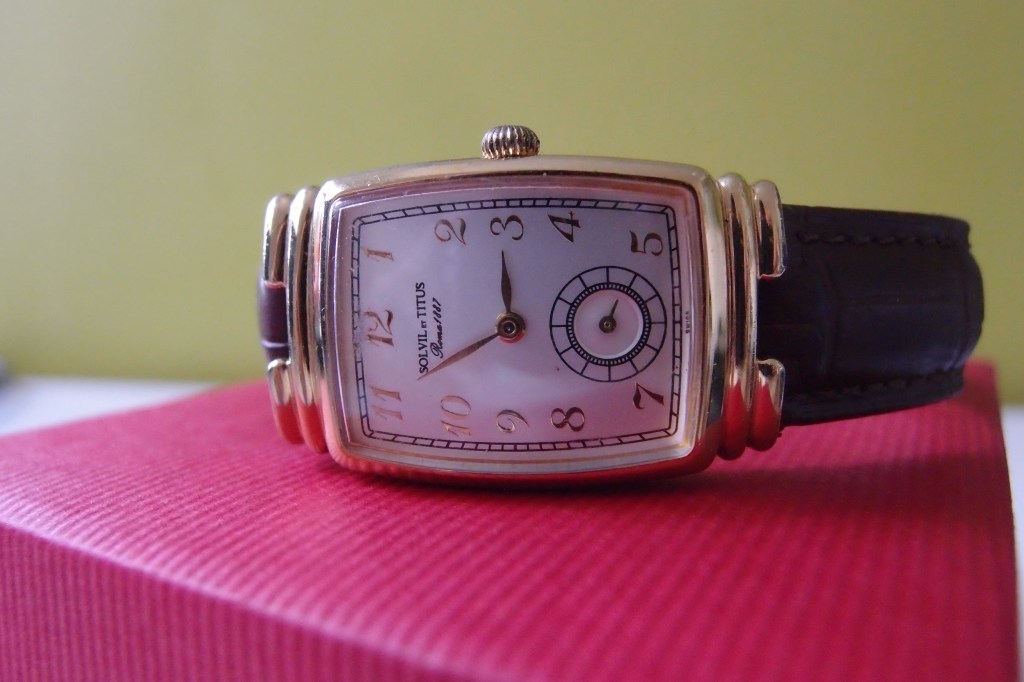
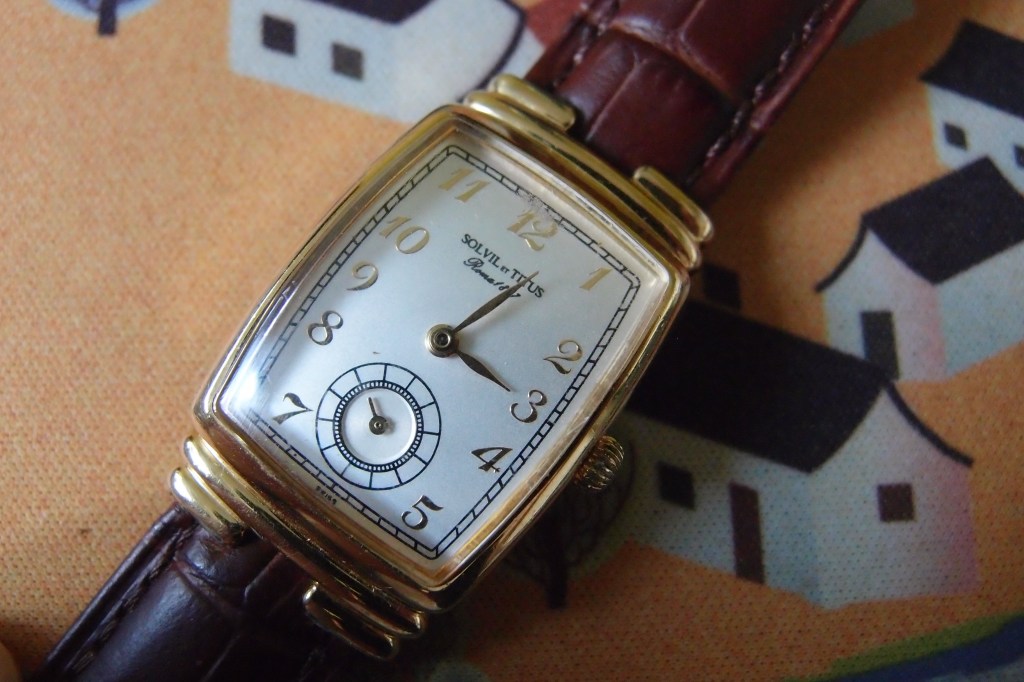
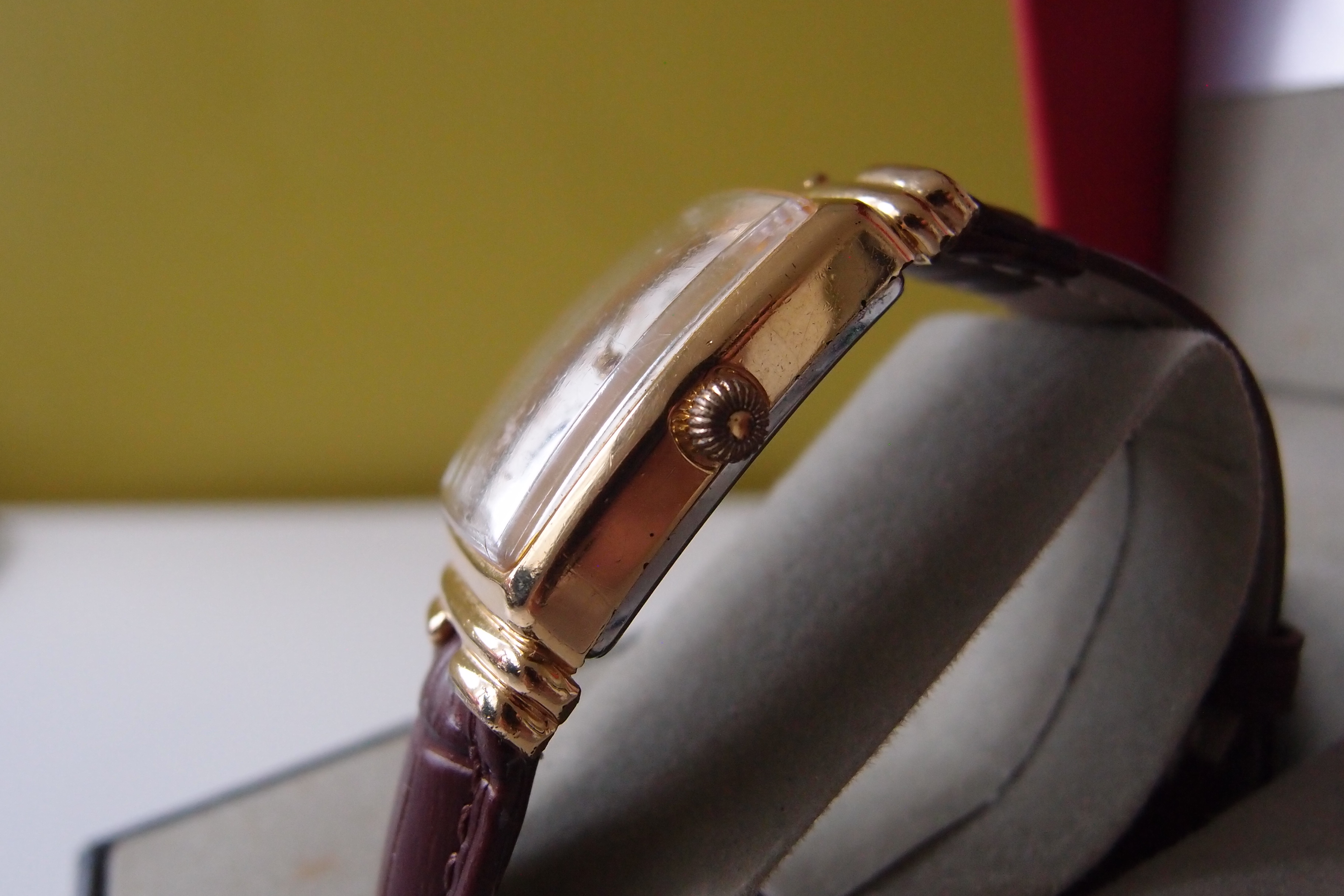
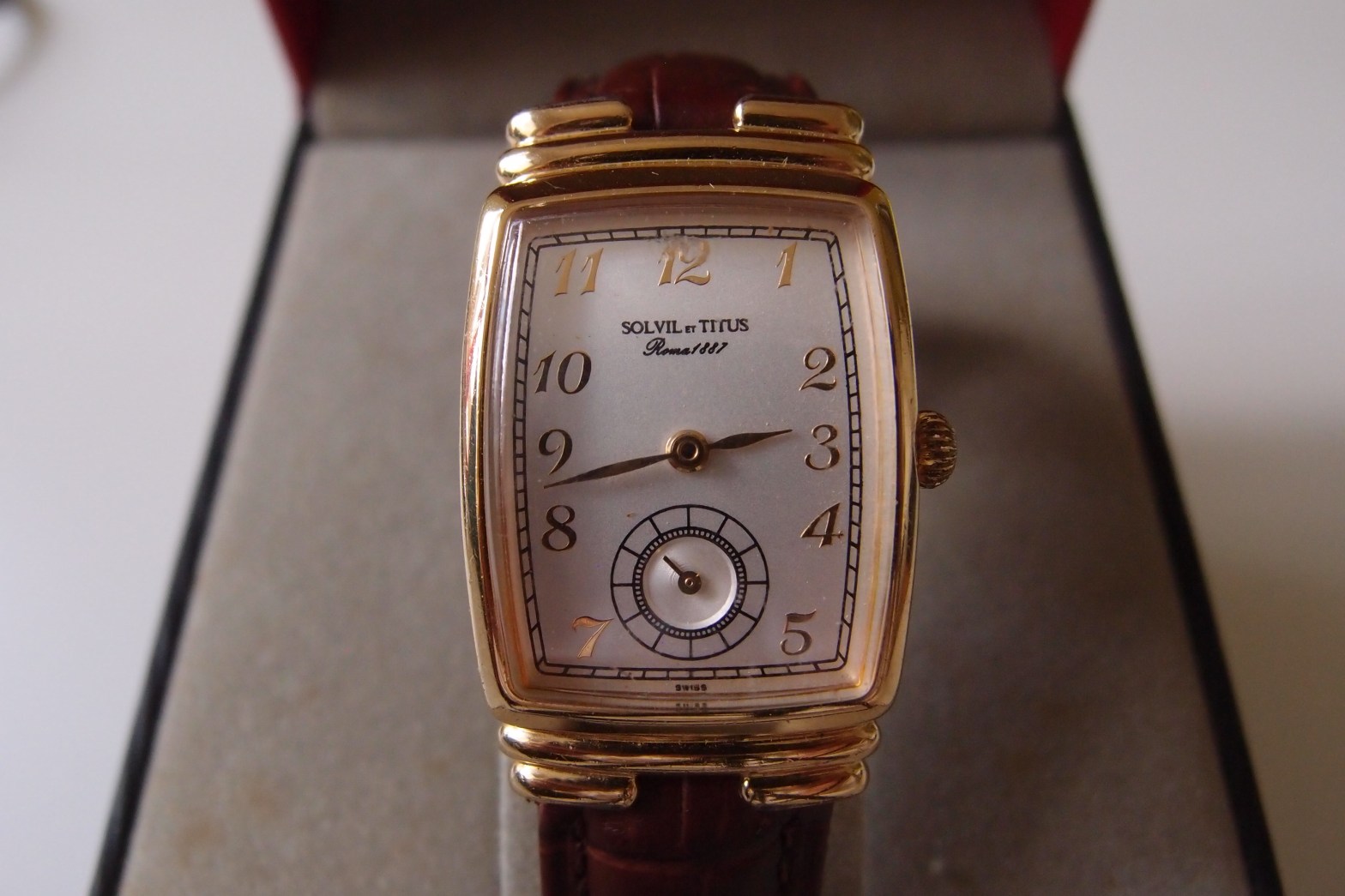
The watch here is a Solvil et Titus ladies watch that was featured in the 1992/1993 watch advert starring Chow Yun Fat and Jacklyn Wu Chien Lien. Thus, the watch was dated circa 1992/1993. The watch has a rectangular shape case with the dimension being 23 mm (width) x 36 mm (length) x 8 mm(thickness). It has a fancy lug design that fits the genre of the watch perfectly. The lug size of the watch is annoyingly 15mm but a 16mm strap can fit in nicely. The gold tone design and compact dimension of the watch suit a lady’s wrist perfectly. Another admirable feature of the watch is its curvature watch design that follows the bend of watch straps when the watch is worn on the wrist. This creates a natural ergonomic feel of the watch to the wearer.
The main highlight of the watch is the dial. Overall, the watch design is heavily influenced by Art Deco, an art style that was prominent from 1910s all the way to 1940s. During that period, Art Deco watches of brands such as Hamilton, Bulova, Longines, Elgin and more were produced in large numbers and popular among both men and women. Back to this watch, its dial colour is off-white/creamy white with the sub-second dial has a sunburst finishing, giving the dial an extra depth. Scales resembling railroad track are found at outer ring of the main and sub-second dials. These are useful by making time reading of the watch easy albeit it is a dress watch. The Arabic numerals and leaf style hour and second markers are applied in gold, which complements the watch case colour. The brand name is found on the dial without its logo, in which I think is a good thing that the inclusion of the logo would only make the dial cluttered given that fact that the watch is small in size and a dress watch in nature.
On the other hand, the watch has a small yet nicely-sized onion style crown that is typically found on vintage military and flieger watches. I think this crown style does not violate the design language of the watch. In fact, it adds a nice touch to the simple design of the watch. Together with the watch case, it has a domed and curved acrylic crystal, in which the crystal stays true to the Art Deco and vintage watches.
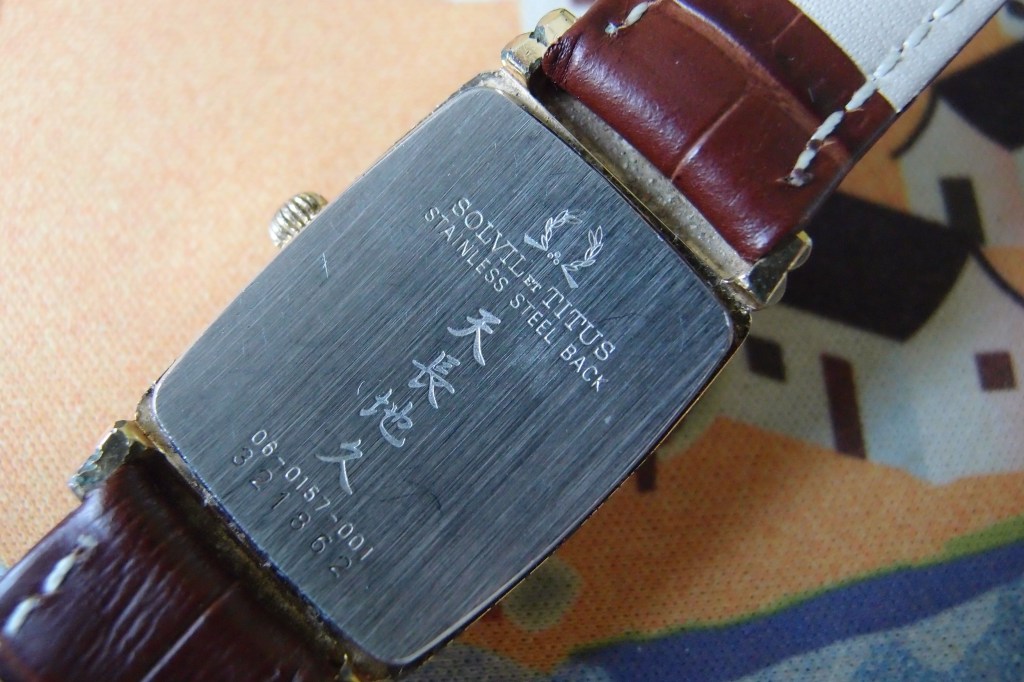
Moving to the back of the watch, it has a snap back case with the etching of logo, branding, the series name ‘天长地久’, serial and batch numbers are found there. The etched series name suits the watch that it creates a romantic aura within the watch and it is what’s Solvil et Titus is proud of. The watch is quartz-powered and it is likely to contain a Swiss quartz movement due to the printing of ‘Swiss’ term on the bottom of the dial. However, this has not be confirmed as the case back of the watch is not opened for inspection.
In short, one should not overlook or even despise the options that Solvil et Titus brand has to offer just because of the brand itself is based in Hong Kong now. Just like other Swiss watch brands, Solvil et Titus might not be able to reach its heyday it used to have but one can hold onto a piece of its incredible history by owning one of its vintage watches. That being said, the current line up of collections in the brand still inherit some form of the heritage it possesses.

It is difficult when it comes to getting a proper world time clock due to two main reasons, i.e., not many watch companies making these and there is limited demand for such clock as one can just have a look at his or her phone to check the world time. I have received this Seiko World Time clock last week and it is time (no pun intended) to share my first impressions about the clock on my desk.
The overall design of the clock is spot on. The frame of the clock is made up of gold tone brass which makes it classy and feels expensive when hold in hand. The front and back of the clock are covered with glass and the clock face appears as though it is floating in mid air within the frame. The clock face is certainly the most attractive part of the clock that it consists of a outer rotating face that displays 43 cites worldwide, rotatable 24 hours markers, 12 hours markers and the world map in the centre.
Powering this clock is the Seikosha quartz movement and unsurprisingly it is very accurate. Perhaps the most pleasing moment when one looks at the clock is the smooth sweeping action of the second hand with a plane at its end. It is as if the plane flies around the globe infinitely.
The Seiko World Time desk clock certainly appeals to those who need a reliable, classic and robust world time clock.

Junghans is a German watch brand that is well known for its Max Bill line of watches. These watches are based on Bauhaus design, which basically serves as an inspiration for the creation of numerous other Bauhaus-inspired designed watches. However, another collection line of Junghans, i.e. Meister, should not be neglected as mechanical watches of the Meister collection were first produced in the 1930s, with their heyday in the 1950s and 1960s. Junghans produced wristwatch movements of chronometer quality from 1950s; by 1956 the company was already the third-largest producer of chronometers in the world. 1957 saw the appearance of the first automatic chronometer calibre J83, one of the finest of its kind anywhere.
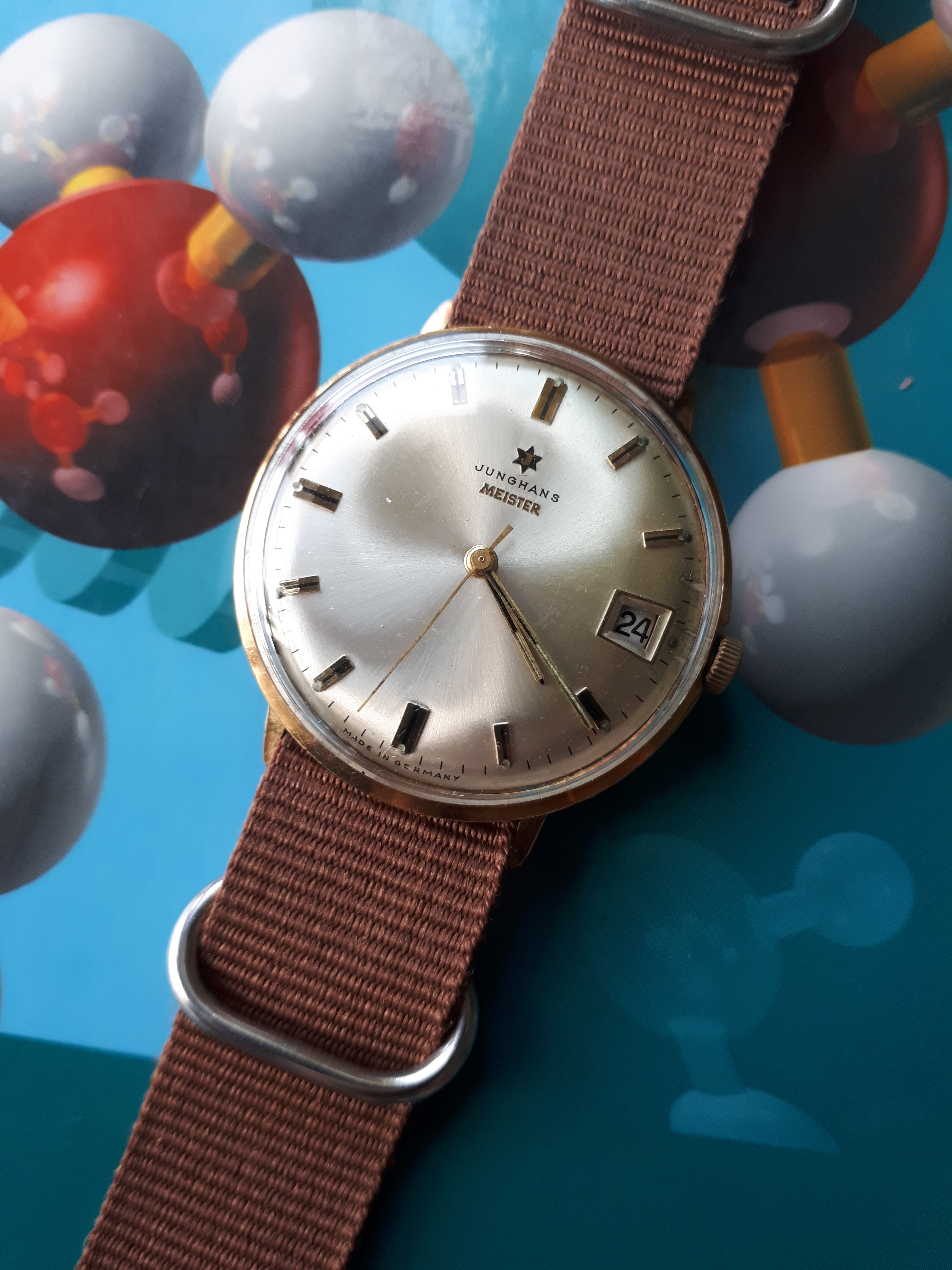
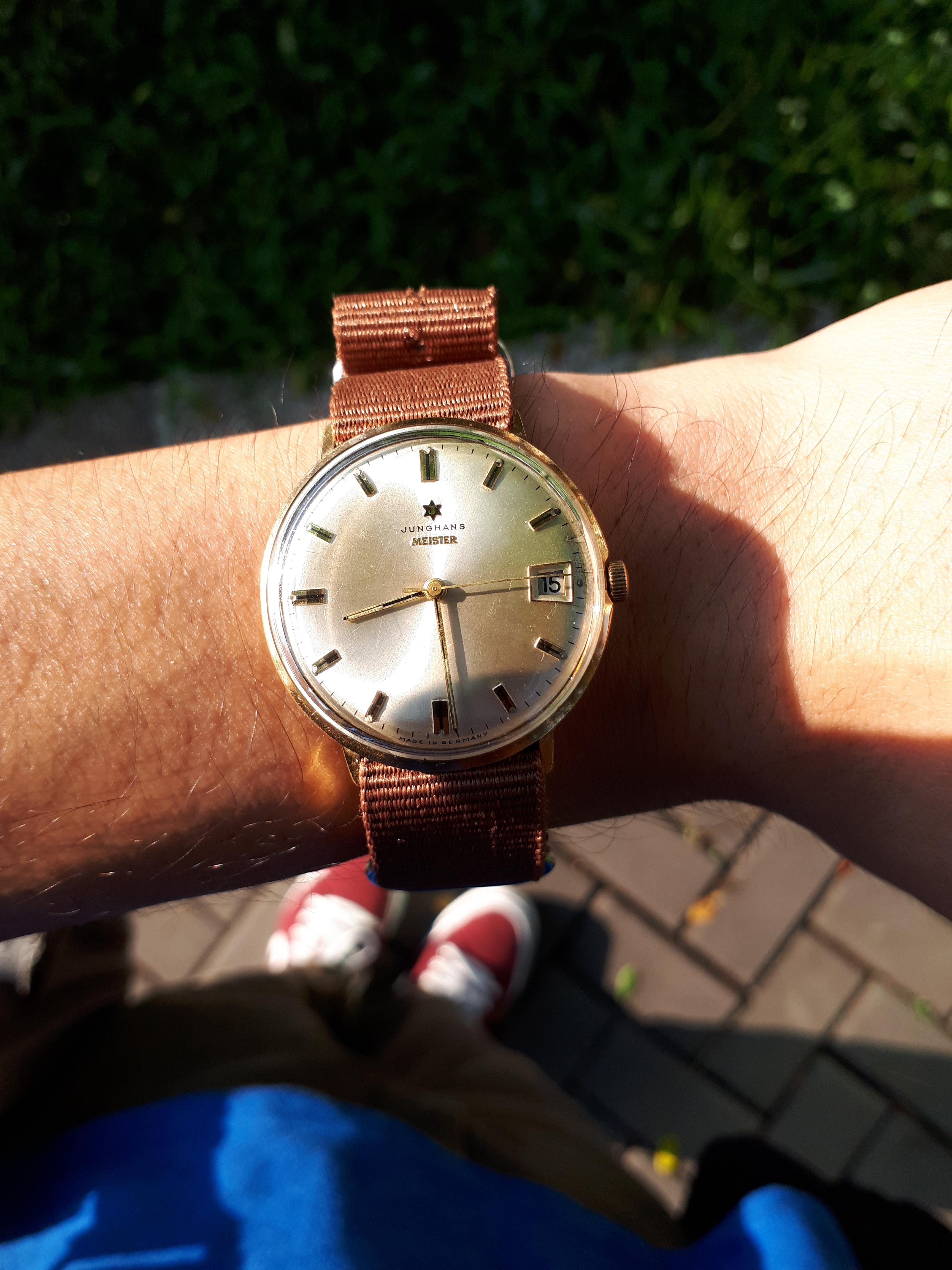
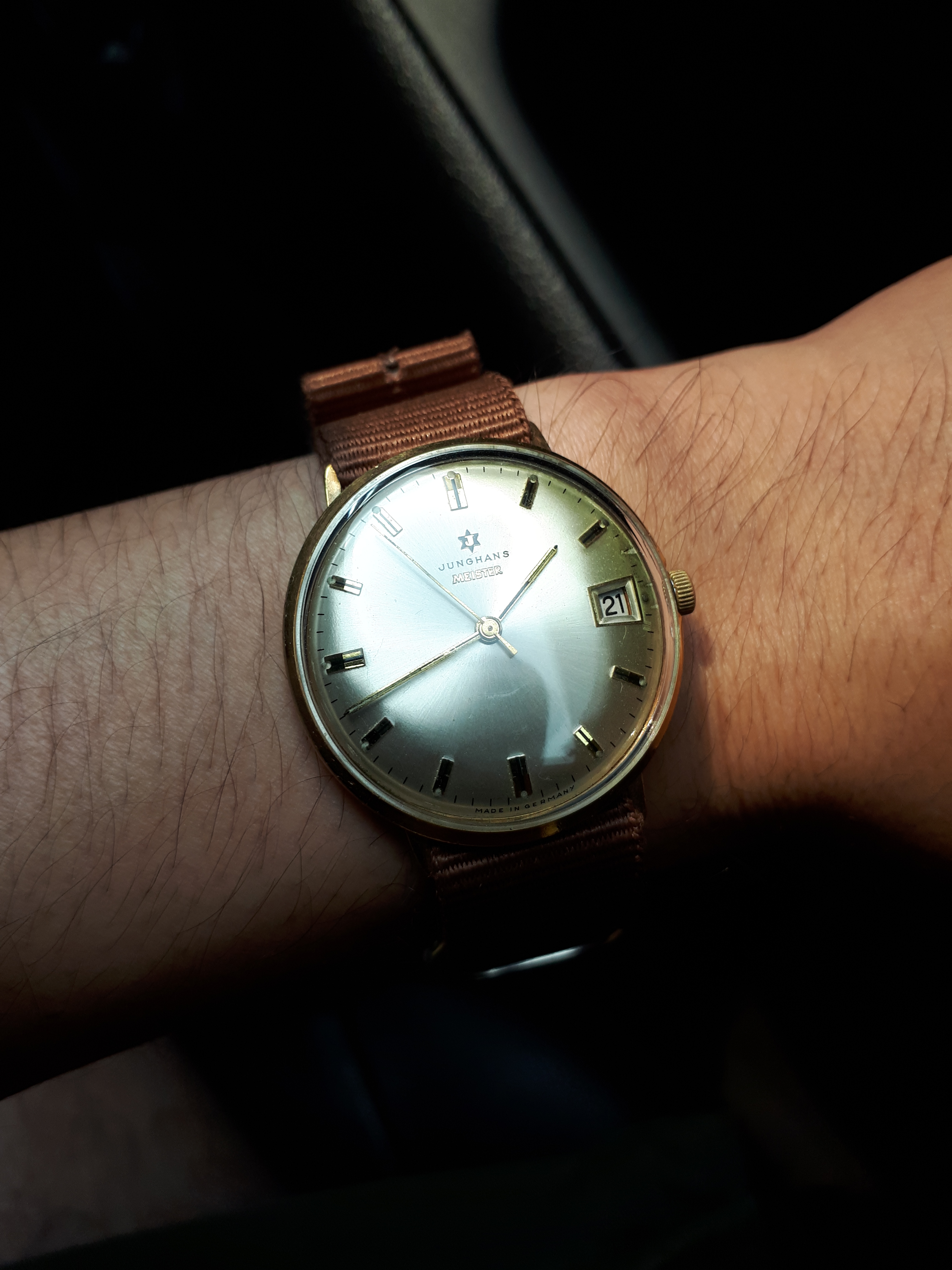
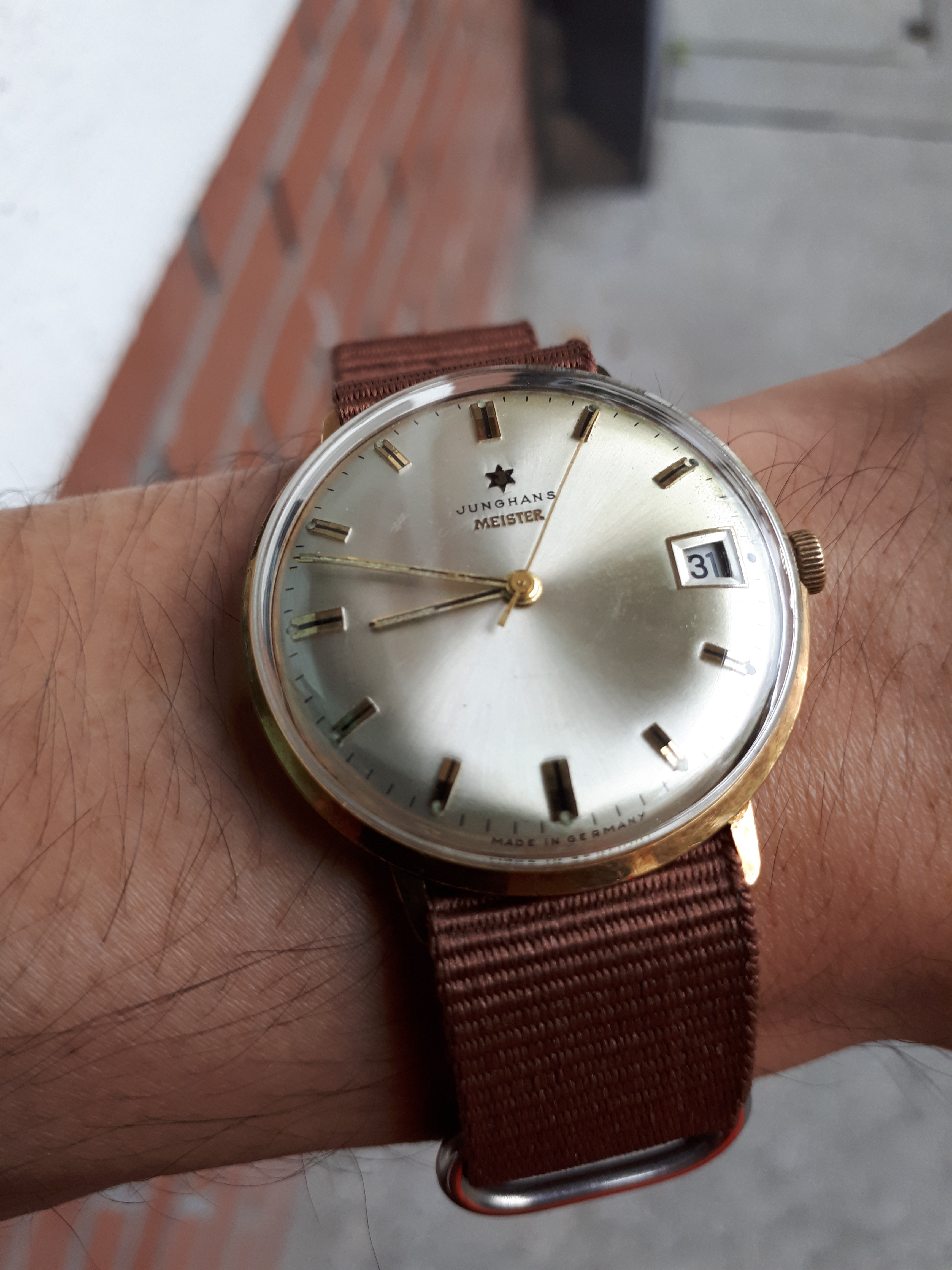
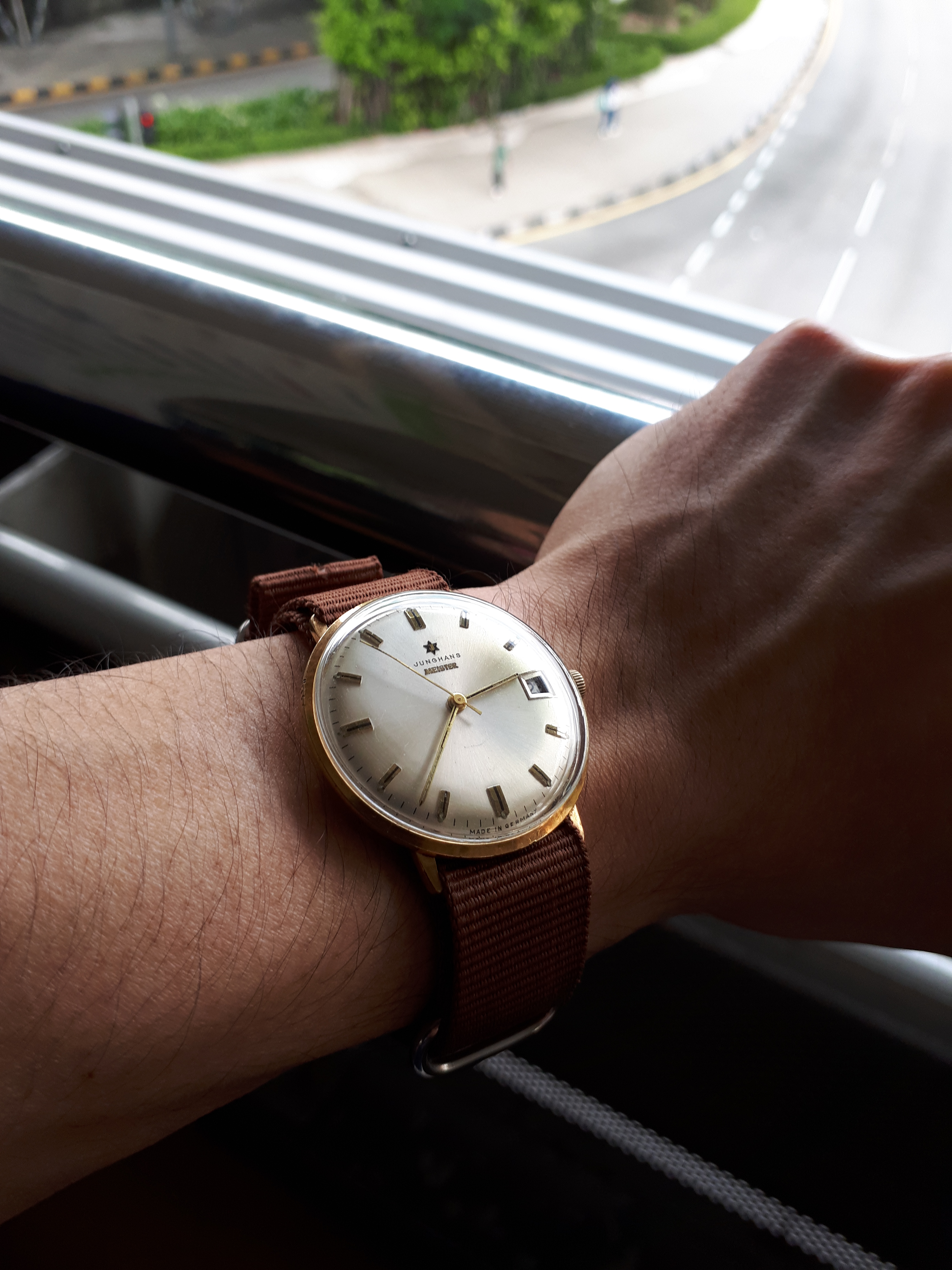
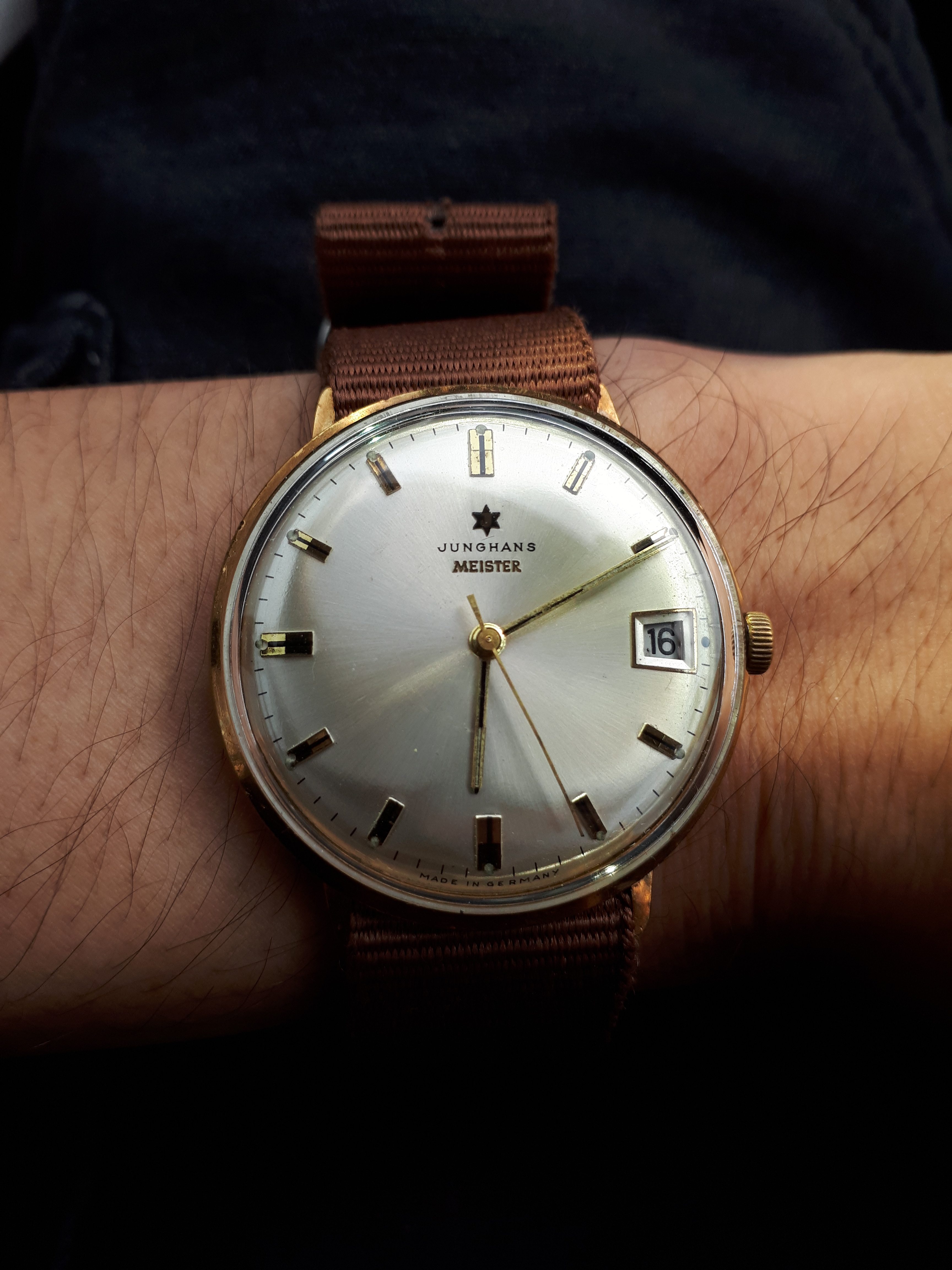
Below is a 1960s Junghans Meister as part of my collection. At first glance, the watch is very slim that sits at almost 10mm and the case diameter is 35mm, a classic diameter for men’s wrist in the older days and maybe nowadays. The watch has a sunburst finish dial and it gives you different feelings towards it depending on how it reacts to the light. As a result, this watch is mesmerizing to look at as also partly because of the high dome acrylic crystal.
The movement under the hood of the watch is an Junghans in-house movement, i.e. Junghans 684. As far as I know, it is a more or less a very little simplified caliber 685, which was the last Junghans chronometer movement. Please refer to following link for more information about the movement: https://17jewels.info/movements/j/junghans/junghans-684-12/. Honestly speaking, I am fascinated by the movement as this watch keep impeccable time accuracy after service and I foresee that it only requires service in next few years.
I hope that this mini review will bring more watch enthusiasts to appreciate this German brand that I feel that is underrated. Thanks for reading!
NB: Refer to following German blog watch video for comparison between vintage and modern Junghans Meister https://www.youtube.com/watch?v=n-DT-oShlc4
Have a WordPress.com account? Log in now.